Handmade Embroidery Font: A Warm Choice for Branding
I still remember the moment I opened a blank brand board for a local artisan bakery. The client wanted something that felt like a warm hug—approachable, handmade, and distinctly un-corporate. I scrolled through my library of Script Amp releases, looking for that perfect balance between legibility and charm. That is when I pulled up Handmade Embroidery. It wasn’t just another handwritten font; it had a specific texture and rhythm that felt immediately right for the project. After testing it across everything from logo drafts to packaging mockups, I found it to be a versatile tool for designers seeking warmth without sacrificing professionalism.
The Visual Personality of Handmade Embroidery
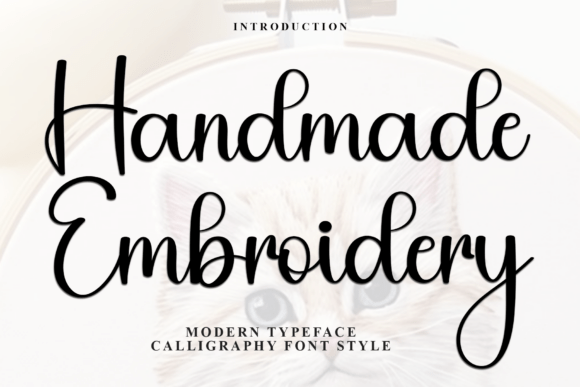
Handmade Embroidery is a casual and creative typeface that exudes warmth and friendliness. Its round, playful strokes create a relaxed and approachable feel, making it an instant favorite for personal projects, invitations, and boutique branding. Visually, the font mimics the organic imperfections of thread work or soft brush lettering. The terminals are rounded rather than sharp, which softens the overall impact. This is crucial in logo design, where you want to invite the viewer in rather than intimidate them with rigid geometry.
When I first typed out the bakery’s name, the letters sat comfortably next to each other. There is a natural flow to the connectivity, even though it is not a fully connected script. This semi-connected style offers a significant advantage in readability compared to more complex cursive options. It feels authentic, as if it were stitched or drawn by hand, which aligns perfectly with the current trend toward human-centric modern typography in small business branding.
Performance in Real-World Brand Identity Projects
Testing a premium font requires more than just typing a few words in a document. I needed to see how Handmade Embroidery held up in various applications. For the logo, it worked beautifully as a standalone mark. The weight was substantial enough to remain visible on a small social media avatar but delicate enough to look elegant on a large storefront sign. I appreciated how the font maintained its character at different scales. In packaging design, specifically on kraft paper labels, the font’s organic nature complemented the textured background, creating a cohesive tactile experience for the customer.
I also experimented with it in web design contexts. Using it for homepage hero headers added an immediate layer of personality. However, I was careful not to overuse it. Because it is a display font with distinct characteristics, it shines best in headlines, short phrases, or accent text. When I tried using it for longer paragraphs in an editorial layout, the readability dropped. This is a common trait among creative fonts, and it serves as a reminder to respect the intended use case. It is not designed for body copy, but it excels at drawing attention to key messages.
Pairing Strategies for Maximum Impact
One of the most critical aspects of using a distinctive script font like Handmade Embroidery is finding the right partner. A strong font pairing can elevate a design from good to great. In my bakery project, I paired it with a clean, geometric sans serif font. The contrast between the rounded, playful strokes of the embroidery style and the straight, neutral lines of the sans serif created a balanced visual hierarchy. The sans serif handled the informational heavy lifting—ingredients, prices, and contact details—while Handmade Embroidery provided the emotional hook.
I also tested it against a classic serif font for a more traditional, literary feel. This combination worked well for a wedding invitation suite, where the serif added a touch of formality and history, while the handwritten element kept it feeling personal and intimate. If you are working on a creative studio identity, try pairing it with a minimalist mono-spaced font for a contemporary, edgy contrast. The key is to ensure the supporting typeface does not compete for attention. Let Handmade Embroidery be the star, and let the secondary font support it quietly.
Limitations and Practical Considerations
While I found Handmade Embroidery to be highly effective, it is not a one-size-fits-all solution. Designers must recognize its limitations. As mentioned, it is not suitable for long-form text. Attempting to use it for body copy in a brochure or website article will frustrate readers. Additionally, because of its casual and friendly nature, it may not be appropriate for formal corporate environments, legal firms, or high-tech industries that require a sterile, authoritative aesthetic. Context is everything.
Another practical note involves technical specifications. Before committing to this commercial font for client work, always review the included styles. Check for alternates, ligatures, or swashes that might add variety to your designs. Verify multilingual support if your project targets international audiences. Ensure that the file formats provided include webfont versions if you plan to use it on digital platforms. These technical checks prevent headaches later in the production phase.
Licensing is another non-negotiable step. Always confirm the commercial license terms before using Handmade Embroidery in brand identity systems, merchandise, or print-on-demand products. Different licenses may apply for digital products versus physical goods. Protecting yourself and your client by adhering to these guidelines is part of professional practice.
Final Verdict for Designers and Creators
After extensive testing, I can confidently say that Handmade Embroidery is a valuable addition to any designer’s toolkit. It fills a specific niche for brands that want to communicate warmth, creativity, and approachability. Whether you are designing social media graphics for a handmade shop, creating labels for a skincare line, or crafting invitations for a special event, this font delivers on its promise. It brings a human touch to digital and print media, helping brands connect with their audience on an emotional level.
For entrepreneurs and small business owners, using a creative font like this can differentiate your visual presence in a crowded market. It signals that there is a person behind the brand, not just a corporation. For graphic designers, it offers a reliable, aesthetically pleasing option that pairs well with a wide range of secondary typefaces. Just remember to use it strategically, respecting its strengths as a display and accent typeface. When used correctly, Handmade Embroidery adds that final layer of polish and personality that turns a standard design into a memorable brand experience.